
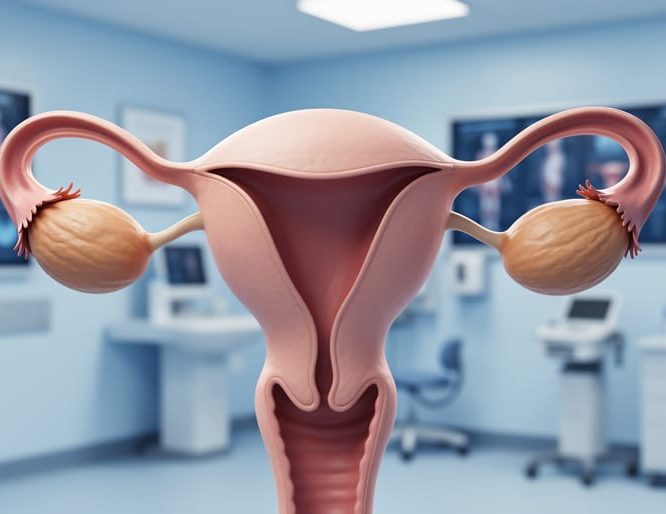
The ovaries produce eggs in the female reproductive system. These almond-sized organs, located on either side of the uterus, are responsible for storing and releasing the oocytes (immature egg cells) that make conception possible.
Understanding how your ovaries function isn’t just biology trivia. For anyone navigating fertility challenges, tracking cycles, or exploring conception options, knowing what happens inside these small but powerful organs can help you make informed decisions about your reproductive health. The ovaries don’t just release eggs; they also produce the hormones that regulate your menstrual cycle and support early pregnancy.
If you’ve ever wondered why fertility naturally declines with age, or how ovulation timing affects your chances of conceiving, the answer begins with what’s happening in your ovaries right now. Unlike sperm, which the male body produces continuously, you were born with all the eggs you’ll ever have. Your ovaries carefully manage this finite reserve throughout your reproductive years, releasing typically one mature egg each cycle through a complex process guided by hormonal signals.
This article breaks down exactly how egg production and release work, the key components involved in this process, and what it all means for your fertility journey. Whether you’re just starting to learn about conception or looking for deeper insight into your reproductive health, you’ll find clear, practical guidance here.
What Egg Production Means: The Ovaries’ Role
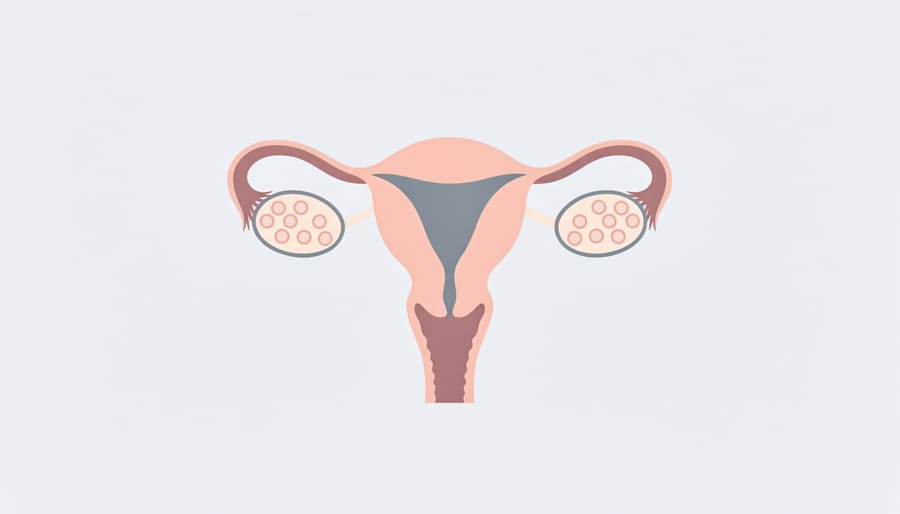
At its core, egg production in the female reproductive system happens in the ovaries. These two almond-shaped organs sit on either side of the uterus and serve as the body’s egg factories. Each ovary contains thousands of tiny, fluid-filled sacs called follicles, and within each follicle lies an immature egg, or oocyte. This process of developing and maturing eggs is called oogenesis, and it’s central to understanding ovaries and fertility.
To grasp how egg production works, it helps to know a few key terms:
- Ovaries
- The paired organs that produce eggs and reproductive hormones. They’re where all egg development takes place.
- Follicles
- Tiny sacs within the ovaries that house and nourish immature eggs. Each follicle supports one egg as it grows.
- Oocytes
- The scientific term for eggs. An oocyte is the female reproductive cell that, when mature, can be fertilized.
- Oogenesis
- The complete process of egg development, from the earliest stages to a fully mature egg ready for ovulation.
What’s remarkable is that this process begins long before you’re born. Oogenesis begins before birth while a female fetus is still developing in the womb. By the time a baby girl is born, her ovaries already contain all the eggs she’ll ever have. These eggs remain dormant, paused in development, until puberty signals the start of regular ovulation cycles.
From puberty onward, the ovaries begin releasing mature eggs each month, a rhythm that continues until menopause. Not every follicle will release an egg, only a fraction of the eggs present at birth will ever mature and ovulate during a woman’s reproductive years. Understanding this timeline can help clarify why egg quality and quantity shift over time, and why fertility changes as we age.
How Egg Production Works: From Development to Release
The Hormonal Symphony Behind Ovulation
Ovulation doesn’t just happen on its own, it’s the result of a carefully coordinated conversation between your brain and your ovaries. Think of it as a relay race where each organ passes the baton at exactly the right moment.
It starts in your brain, in a region called the hypothalamus. This command center senses when it’s time to begin a new cycle and releases a hormone that signals the pituitary gland, a small structure just below it. The pituitary responds by releasing follicle-stimulating hormone (FSH), which travels through your bloodstream to the ovaries. FSH does exactly what its name suggests: it stimulates several follicles to start developing, each containing an immature egg.
As these follicles grow, they produce estrogen. Rising estrogen levels send feedback to the brain, signaling that the follicles are maturing. When estrogen reaches a certain threshold, it triggers the pituitary to release a surge of luteinizing hormone (LH). This LH surge is the final signal, it tells the most mature follicle to release its egg.
After ovulation, the empty follicle transforms into a structure that produces progesterone, preparing the uterine lining for a potential pregnancy. If fertilization doesn’t occur, hormone levels drop, menstruation begins, and the cycle starts again.
Understanding this hormonal interplay can be empowering, especially if you’re tracking your cycle for conception. When one part of this communication breaks down, whether from stress, health conditions, or other factors, it can affect the entire process. Recognizing how these systems work together helps you and your healthcare team identify where support might be needed.
What Happens to an Egg After Ovulation
Once the egg is released from the ovary, it begins a quiet journey through the fallopian tube toward the uterus. Tiny hair-like structures called cilia sweep the egg along, creating a path where fertilization may happen. This journey takes several days, during which the egg remains viable for a brief window, typically less than a day after ovulation.
If sperm are present in the fallopian tube during this time, fertilization can occur. When sperm meets egg, they join to form a single cell that will continue traveling toward the uterus, eventually implanting in the uterine lining if conditions support it. For those tracking ovulation to conceive, understanding this narrow window helps time intercourse or insemination most effectively.
If the egg isn’t fertilized, it simply dissolves and is absorbed by the body. The hormones that surged to support a potential pregnancy begin to decline, triggering menstruation roughly two weeks later. The uterine lining, which thickened in preparation, sheds during your period, and the cycle begins again.
This process repeats month after month, a rhythm your body follows naturally. Some cycles result in pregnancy; many do not. Both outcomes are part of the normal reproductive pattern. For anyone navigating fertility challenges, knowing what happens after ovulation can bring clarity to the waiting, testing, and planning that often accompany the journey toward conception.
Components of the Egg Production System
The egg production system relies on several interconnected structures working together. Understanding how each component contributes to fertility can help demystify the reproductive process and support informed decisions about conception.
At the center are the ovaries, paired organs about the size of almonds, which serve as both storage and maturation sites for eggs. Think of them as specialized incubators, housing eggs in various stages of development throughout a person’s reproductive years. The ovaries also produce hormones that regulate the menstrual cycle and support overall reproductive health.
Within each ovary, follicles act as individual protective chambers for developing eggs. Each follicle provides nourishment and hormonal support to a single egg as it matures. During each cycle, several follicles begin developing, though typically only one reaches full maturity and releases its egg during ovulation.
The fallopian tubes extend from either side of the uterus toward the ovaries, creating a pathway for the released egg. These delicate tubes do more than transport, their inner lining contains tiny hair-like structures called cilia that gently guide the egg toward the uterus. The fallopian tubes also serve as the usual site where fertilization occurs if sperm are present.
The system functions as an integrated whole, with the primary reproductive organs working in coordination:
- Ovaries store and mature eggs while producing essential hormones
- Follicles create a protective, nourishing environment for developing eggs
- Fallopian tubes transport eggs and provide the site for fertilization
- Uterus prepares monthly to receive and support a fertilized egg
Supporting structures include the hypothalamus and pituitary gland in the brain, which orchestrate hormonal signals that control the timing of egg maturation and release. The cervix and uterus also play crucial roles by creating conditions favorable for conception and potential pregnancy. Each component depends on the others, forming a remarkably coordinated system designed to support fertility.
How Understanding Egg Production Supports Fertility
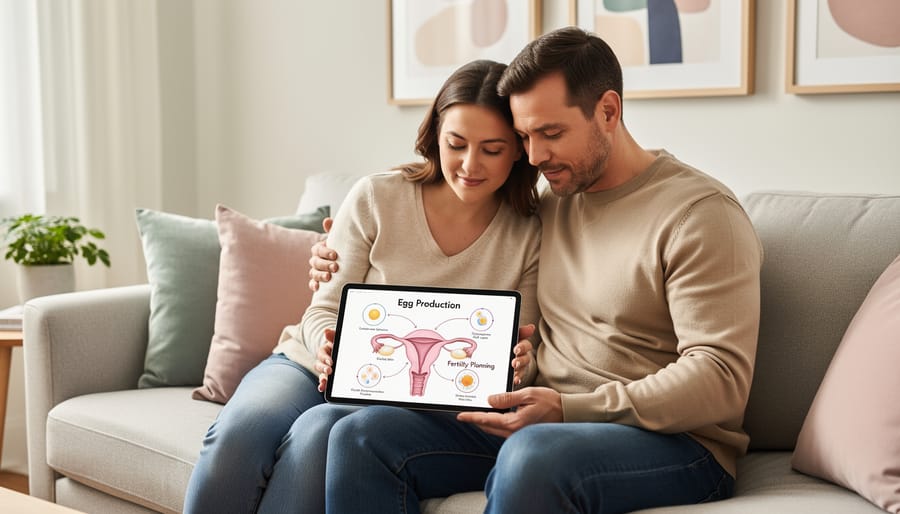
Grasping how your body produces eggs transforms abstract biology into practical fertility insights. When you understand the ovaries role in conception you gain tools to make informed decisions about timing, treatment options, and family planning strategies that align with your unique situation.
Tracking ovulation gives you a window into your reproductive cycle. By identifying when an egg releases each month, you can optimize timing for conception or recognize irregularities that might warrant medical consultation. This awareness often reduces the anxiety of wondering whether you’re trying at the right time. Methods like monitoring basal body temperature, observing cervical mucus changes, or using ovulation predictor kits become more meaningful when you understand the hormonal shifts driving these physical signs.
Egg quality matters just as much as quantity. While you can’t directly measure individual egg quality at home, knowing that factors like age, nutrition, stress levels, and overall health influence egg development helps you take proactive steps. This knowledge empowers conversations with healthcare providers about personalized strategies, whether that involves lifestyle adjustments, medical interventions, or exploring assisted reproductive technologies.
Recognizing changes in your menstrual cycle can signal shifts in egg production. Irregular periods, changes in cycle length, or absent ovulation may indicate hormonal imbalances or other conditions affecting fertility. Early awareness allows you to seek evaluation sooner rather than later, potentially expanding your treatment options and improving outcomes.
Variations in egg production affect each person differently. Some experience regular cycles with predictable ovulation, while others face challenges like diminished ovarian reserve or polycystic ovary syndrome. Understanding that your fertility journey is uniquely yours, shaped by your body’s specific egg production patterns, helps you approach decisions with both realism and hope.
Common Questions About Egg Production
Understanding how your body produces eggs can raise many questions, especially if you’re navigating fertility decisions or challenges. Here are clear, compassionate answers to some of the most common concerns about egg production and how ovaries help fertility.
When do ovaries start and stop producing eggs?
Your ovaries begin developing eggs before you’re even born, during fetal development. This egg reserve decreases naturally over time, and ovulation typically continues from puberty until menopause, which varies for each person.
What’s the difference between egg production and ovulation?
Egg production refers to the development and maturation of eggs within your ovaries, while ovulation is the specific monthly event when a mature egg is released. Your body continuously matures eggs, but ovulation happens once per cycle.
What factors affect egg quality?
Age is the most significant factor, as egg quality naturally declines over time. Lifestyle choices like nutrition, stress management, sleep, smoking, and alcohol use also play important roles, as do certain medical conditions and environmental exposures.
When should I seek support about egg production concerns?
If you’ve been trying to conceive without success, have irregular or absent periods, experience early menopause symptoms, or have concerns about your fertility timeline, reaching out to a healthcare provider can help you understand your options and take proactive steps.
Many people wonder whether they can improve egg production or quality. While you can’t increase the number of eggs you were born with, you can support the health of the eggs you have. Maintaining a balanced diet rich in antioxidants, managing stress, getting regular exercise, and avoiding smoking can all contribute to healthier eggs. Some find that working with a fertility specialist helps them understand their individual egg reserve and what steps might be most beneficial for their situation.
Age does impact both the quantity and quality of eggs available. As you get older, the eggs that remain have been present in your body longer and may be more susceptible to chromosomal changes. This doesn’t mean pregnancy becomes impossible, but it may take longer or require additional support. Understanding your body’s timeline empowers you to make informed decisions about family planning, whether that means trying to conceive now, exploring egg freezing, or considering assisted reproductive options.
Remember that everyone’s fertility journey is unique. What works for one person may differ for another, and there’s no one-size-fits-all answer. The combination of self-knowledge, medical guidance, and community support can help you navigate these questions with confidence and hope.
Understanding what produces eggs in the female reproductive system, and how that process unfolds, empowers you to make informed decisions about your fertility journey. The ovaries, with their complex interplay of hormones and biological rhythms, are at the heart of reproduction, and learning how they function can help you recognize patterns, ask the right questions, and advocate for yourself with confidence.
Whether you’re tracking your cycle, exploring fertility treatments, or simply seeking clarity about your body, this knowledge is a tool. It won’t answer every question or solve every challenge, but it offers a foundation. And you’re not navigating this alone. Supportive communities, compassionate healthcare providers, and evidence-based resources are here to guide you.
Your fertility story is uniquely yours, shaped by biology, circumstance, and choice. By understanding the fundamentals of egg production, you take an active role in that story, one informed decision at a time. We’re here to walk alongside you with empathy, education, and hope for whatever path lies ahead.