
LGBTQ Communities and AHR Services

Printer-friendly versionPrinter-friendly version
Beginning a conversation
Rachel Epstein
Winter 2008
 
I got pregnant 17 years ago using donor sperm at a fertility clinic in downtown Toronto. I was part of an early wave of lesbian/bisexual/queer-identified women who were accessing reproductive technologies to build our families. Today my daughter is 16 and I am the coordinator of the LGBTQ Parenting Network, a program located at the Sherbourne Health Centre that provides resources, support, and information to LGBTQ (lesbian, gay, bisexual, transgender, queer) parents and prospective parents. We also do research, advocacy and training. Since 1997 I’ve been teaching a course called Dykes Planning Tykes (DPT), a 12-week course for lesbian/bisexual/queer women who are considering parenthood. DPT spawned Daddies & Papas 2B (DP2B), a similar course for gay/bisexual/queer men, and that in turn spawned Trans Fathers 2B (TF2B), a course for FTM (female-to-male) men considering parenthood. These courses, run jointly with Queer Parenting Programs at the 519 Church Street Community Centre, provide prospective parents with a place to get information, to grapple with important decisions, to meet and hear about the journeys of other LGBTQ parents, and, most importantly, to build community. 
 
In 1991, when I got pregnant, there were no resources like these. There were no groups, no courses, no places to go for information. There were doctors and fertility clinics that required lesbians to undergo psychiatric assessments in order to gain access to donor sperm; one doctor in Toronto asked lesbians to write a “letter to the doctor” to convince him to provide access to sperm and insemination services. Non-biological parents had no legal right to their children -- women were courageously committing themselves to children with no guarantees that they would be protected in their parenting roles. The gay fathers who were visible were mostly those who had had children in heterosexual contexts before they “came out.” They were struggling with disclosing sexual orientation to children and spouses, with the consequences of a homophobic legal system, and with their own identities. Trans parents were virtually invisible – and where they were visible they were subject to excruciating discrimination.
 
Things have changed enormously since then. Non-biological parents have access to second- parent adoptions and can be legally recognized as parents; two women using anonymous sperm donation to conceive can put both their names directly on the Statement of Live Birth (though a victory, there remain outstanding issues with regards to birth certificates and the information they contain – or don’t – about legal parentage and biological origins, as well as
legal protection issues for those who use identified sperm donors); a court in London, Ontario, recognized three people -- a lesbian couple and the man they are parenting with -- as legal parents of a child. Trans people are becoming more organized and visible and are advocating for their rights, including the right to parent. We are in the midst of what some refer to as a lesbian baby boom, or, depending on gender, a “gayby” boom. Gay/bisexual/queer men are increasingly bringing kids into their lives through adoption, co-parenting and surrogacy. Our courses are packed – people sometimes have to wait years to get in. Many LGBTQ people now feel entitled to parent.
 
However, our right to parent is not without opposition. As witnessed during the same-sex marriage debate a few years ago, many oppose same-sex marriage because they oppose our right to be parents and fear that our children will suffer in our families. I could write pages about how tired we are of these arguments, about the years we have spent defending our right to parent, proving our children are “normal,” that they turn out “just the same” as children growing up in heterosexual families. Countless research projects have been conducted to “prove” that our children are fine. More recent research, in fact, points to the ways our children might be uniquely blessed: they are more aware of and open to social and sexual diversity of all kinds; they conform less to gender stereotypes; they have higher self-esteem than children growing up in heterosexual families; and they tend to live in families where there is more equitable division of labour (Stacey & Biblarz, 2001). We know our kids are fine, and the research confirms it.
 
Opposition to our families tends to assume the superiority of a particular model of the family: the traditional nuclear family, consisting of a heterosexual married couple with one or more children who are biologically and genetically related to the parents. This model of the family is considered “natural” and is the model upon which most North American social policy related to the family is based. Ironically, it does not describe what most North American families actually look like.
 
There are countless groups of people whose families do not fit this model: single parents, divorced or separated parents, extended families, blended families. Many are parenting outside of the nuclear dyad and many have parenting relationships with children to whom they are not biologically related – adoptive parents, step-parents, “other” mothers, and any one who makes use of third party reproductive technologies to create families. We all suffer from this rigid definition of what makes a family.
 
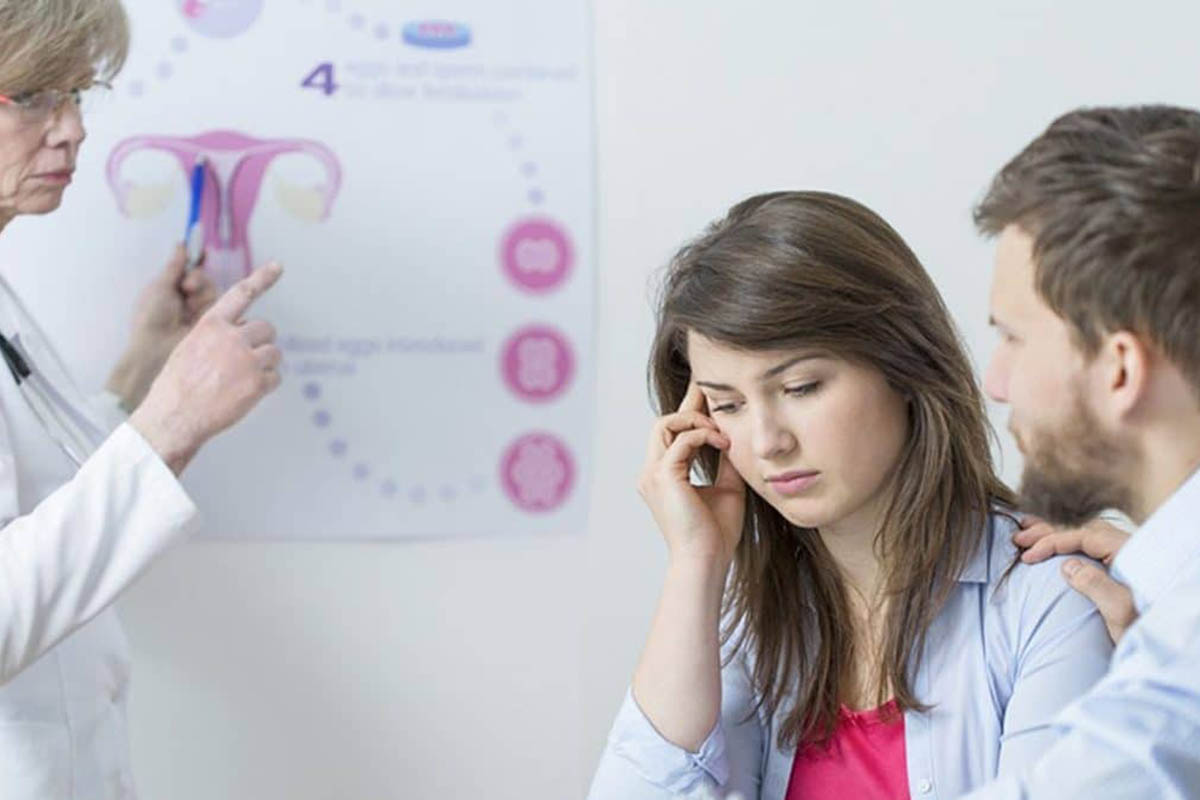
LGBTQ people are also confronted by assumptions of heterosexuality and a nuclear family structure (an example of “heterosexism” – see Glossary of Terms) when we enter fertility clinics and sperm banks to access assisted human reproduction (AHR) services. It hits us in the face when we are handed a form that assumes a female and a male partner; when we see images on the walls of only two-parent heterosexual families; when our partners and other significant people in our families are ignored by our health care providers. Because many of us are accessing assisted human reproductive technologies to create our families, we are walking into clinics in increasing numbers. One Toronto-based fertility clinic estimates that 20-30% of their clients are members of LGBTQ communities (statistic cited at joint session of Dykes Planning Tykes/Daddies & Papas 2B, Toronto, 2007).
           
Because of limited access to sperm in our daily lives, many lesbian/bisexual/queer women access anonymous or I.D. release donor sperm and/or donor conception with known sperm donors or co-parents to build our families. Sometimes we show up at clinics with our donors and/or our co-parents – people we will be parenting with but whom we may not be in romantic or sexual relationships with. Gay/bi/queer men visit clinics as sperm donors, as co-parents or sometimes as part of surrogacy arrangements involving egg donors and gestational surrogates. Trans men come to clinics seeking donor insemination for themselves or accompanying a partner or co-parent who is attempting pregnancy. A trans woman may want to freeze sperm before transitioning, or may come in with a female partner who wants to be inseminated with the trans woman’s sperm. A trans woman and her partner/co-parent(s) might also want to set up a surrogacy arrangement with an egg donor and gestational carrier.
 
What’s usually true is that our families don’t look like that traditional, nuclear, heterosexual family, and we enter fertility clinics with some unique and important differences from the heterosexual couple seeking assistance to conceive.
 
LGBTQ communities have experienced the practice of gate-keeping in relation to AHR services, and so we sometimes walk into clinics wondering if we will be granted service at all. One participant in a recent research study was required to undergo a police check and a social work home study before being granted access to donor sperm (Ross, Steele Epstein, 2006a, p. 508). The AHRA (Assisted Human Reproduction Act, Government of Canada) that became law in 2004 includes a non-discrimination clause. We are hopeful that a system for enforcing this clause will soon be in place, and that we will have recourse if we feel we are being discriminated against in the provision of service.
 
When LGBTQ people walk into a fertility clinic, often it is the first step on our path to family creation. Although, of course, some of us do experience fertility challenges, for the most part we use AHR in order to access sperm and egg donations. And yet, because we are entering a system designed to address these issues, we are often pressured to agree to medical interventions that make sense only in the context of infertility. The psychological issues that often face heterosexual couples struggling with infertility – guilt, anger, shame and depression – are most often not the issues we are grappling with. In fact, the stress that we experience is most often due to lack of awareness and sensitivity to our particular circumstances and communities on the part of service providers at fertility clinics and sperm banks. When asked about her experiences with a fertility clinic one of our clients noted, “we need counselling to get over the counselling we are given.” Our biggest hurdle, when accessing AHR services, is overcoming the systemic homophobia, transphobia and heterosexism we so frequently encounter in the health care system.
 
Disclosure issues are different for us too. Much AHR counselling focuses on questions of how and when to disclose the use of AHR technologies to the children conceived by these methods. Again, these issues are experienced very differently by our communities. For the most part, for obvious reasons, disclosure is not a choice for us – most of us tell our children from the start about how they were conceived. Many LGBTQ communities share a history and a culture that values and promotes honesty and truth-telling generally, and in particular with regards to children and childrearing. Too many of us have suffered as young people from secrets we were forced to keep and from silences that denied our experience. We do not want to impose secrets and silences on our children.
 
Instead of focusing on the psychological issues of infertility or issues of disclosure, counselling for LGBT people accessing AHR services would be more effective if it helped us explore:
·        Decisions regarding donors and potential family configurations;
·        How to handle the individual and systemic discrimination we inevitably encounter; 
·        How to deal with religious or cultural views that consider LGBTQ parenting “unnatural;”
·        Legal information related to how to protect all parents and children in our families;
·        Information about support available to us as LGBTQ parents.  
 
In 2001 the LGBTQ Parenting Network held a series of focus groups to inquire about the priorities of LGBTQ parents and prospective parents. Near the top of identified needs was the need for “LGBTQ-positive” professionals. Becoming an “LGBTQ-positive” professional is not simple; it requires a deep level of knowledge translated into behaviours and practices that recognize and acknowledge the histories, cultures and values of LGBTQ communities. This is what is sometimes referred to as “cultural competency.” Cultural competency in relation to LGBTQ communities includes recognizing what a significant client population we are in relation to AHR services and understanding the unique issues we face in our quest to build families.
 
Research conducted in Ontario with lesbian/bi/queer parents in 2003-2004 (Ross, Steele, Epstein, 2006a; 2006b) led to the development of a series of practical recommendations to aid AHR facilities in delivering culturally competent services to LGBTQ communities. These include:  
  1.  
    • Staff that are trained to be culturally competent in relation to LGBTQ communities – to be aware of and sensitive to the needs, concerns and sensibilities of LGBTQ clients, including the specific needs of trans-identified clients.
    • Intake and procedure forms that explicitly make room for family configurations that do not assume male/female relationships, or a two-parent model, recognizing the sometimes complex family configurations that LGBTQ people, and others, are forming.
    • Involvement of all parties desired by patients, including partners, known sperm donors and co-parents.
    • Language and treatment that recognizes that LGBTQ people are often accessing fertility clinics and sperm banks as part of routine family planning, and not as infertility clients. Opportunities should be provided for women to make informed choices about interventions that are consistent with their known or presumed infertility.
    • Cues that services are LGBTQ-positive. These might include positive space imagery or posters and brochures depicting LGBTQ families. Individual service providers can provide cues that they are open to LGBTQ families through choice of gender-neutral language, and attention to the ways that questions are posed.
    • Information available about local LGBTQ services, supports and resources –where feasible, LGBTQ-specific services or services in partnership with LGBTQ communities and/or service providers.
    • Expansion of the selection of donor semen, particularly with respect to donors of diverse ethno-cultural origins and open identity donors.
    • A unified standard of care across geographic regions, and facilitated access for people living outside of major urban centres.
Practitioners committed to cultural competency in relation to LGBTQ communities can use these recommendations to inform their learning and their practice.
 
We are aware of the important debates and controversies taking place in the area of assisted human reproduction and, in particular, with regards to the AHRA. There are those who oppose the system of anonymous sperm donation in favour of the rights of offspring to know their biological origins. Others oppose the AHRA for fear of a shortage of donated sperm and eggs resulting from a law that prohibits payment to donors. At the Sherbourne Health Centre, we are coordinating a working group that is addressing LGBTQ concerns and issues in relation to the AHRA, and through this group we have been invited to speak to the staff and Board of the AHR Agency and to provide input on their website development.
 
In years past we would not have been included in these debates and processes. Our presence as users of AHR services was invisible and our particular concerns were not taken into account. We are hopeful that times are changing, that LGBTQ communities have been brought to the table and that, perhaps, our voices will be heard.
 
Rachel Epstein has been doing research, writing, education, mediation and community organizing related to LGBTQ (lesbian, gay, bisexual, trans, queer) parenting for 17 years. Since 2001 she has coordinated the LGBTQ Parenting Network (Sherbourne Health Centre), providing resources, information and support to LGBTQ parents, prospective parents and their families and training for health care, legal, social work and education professionals. She is also editing an anthology on LGBTQ parenting, to be published by Sumach Press in spring, 2009. Rachel is co-parent to a fabulous 16-year-old girl and step-parent to an equally fabulous 23-year-old boy.
 
The LGBTQ Parenting Network, Sherbourne Health Centre, provides in-service training to fertility clinics and sperm banks wishing to increase their cultural competency in relation to LGBTQ communities. For information on the LGBTQ Parenting Network and/or the LGBTQ – AHRA Working Group, contact: parentingnetwork@sherbourne.on.ca .
 
Thanks to Loralee Gillis, Lori Ross, Chris Veldhoven and the LGBTQ – AHRA Working Group.
 
References
 
Government of Canada. (2004). Assisted Human Reproduction Act: An Act respecting assisted human reproduction and related research.
Ross, L., Steele, L, & Epstein, R. (2006a). Service use and gaps in services for lesbian and bisexual women during donor insemination, pregnancy, and the postpartum period. Journal of Obstetrics & Gynaecology Canada, June, 505-511.
Ross, L, Steele, L, & Epstein, R. (2006b). Lesbian and bisexual women’s recommendations for improving the provision of assisted reproductive technology services. Fertility and Sterility, 86(3), 735-738.
Stacey, J., and T.J. Biblarz. (2001.) “(How) Does the sexual orientation of parents matter?” American Sociological Review, 66, 159-183.
  
Glossary of Terms
 
Lesbian/gay: People whose primary intimate, affectionate, romantic or sexual feelings are for people of the same sex. The term gay is sometimes used to refer to both men and women, although many women prefer the term lesbian. Both words describe more than sexual orientation; for many lesbians and gay men they also reflect a sense of community, shared history, culture and experience.
 
Bisexual: A person whose intimate, affectionate, romantic or sexual feelings may be for people of any sex.
 
Transsexual: A person who was born of one sex, and grows up to identify and live as the opposite sex. Some transsexuals may undergo surgery and/or hormone therapy in order to make their bodies fit what they feel is their true gender.
 
Transgender: An umbrella term used to describe people whose gender varies or is complex, including those who are transsexuals, cross-dressers, or two-spirited.
 
Two-spirited: An umbrella term used in First Nations communities to describe people who house both male and female spirits.
 
Queer: An identity proudly used by some people to defy sexual or gender restrictions.
 
Homophobia/Homonegativity: Irrational fear and/or hatred of, aversion to, and discrimination against people perceived to be gay, lesbian or bisexual.
 
Heterosexism: The assumption that everyone is and should be heterosexual, and that heterosexuality is the only normal form of sexual expression for mature, responsible human beings.
 
Transphobia (less commonly, transprejudice): Discrimination against transsexual or transgender people, based on the expression of their internal gender identity; the negative valuing, stereotyping and discriminatory treatment of individuals whose appearance or identity does not conform to the current social expectations or conventional conceptions of gender.
 
LGBTQ Cultural Competence: A deep level of knowledge translated into behaviours and practices that recognize and acknowledge the histories, cultures and values of LGBTQ communities.
Privacy Policy Sitemap Donate Contact


© 2006-2010 IAAC
Infertility Awareness Association of Canada
2160 Nightingale Ave
Montreal, QC H9S 1E4
Tel: 514 484-2891
Toll free: 1 800 263-2929