When It's His Infertility

Printer-friendly versionPrinter-friendly version

Men’s emotional responses

Sherry Dale, MSW, RSW
Summer 2009

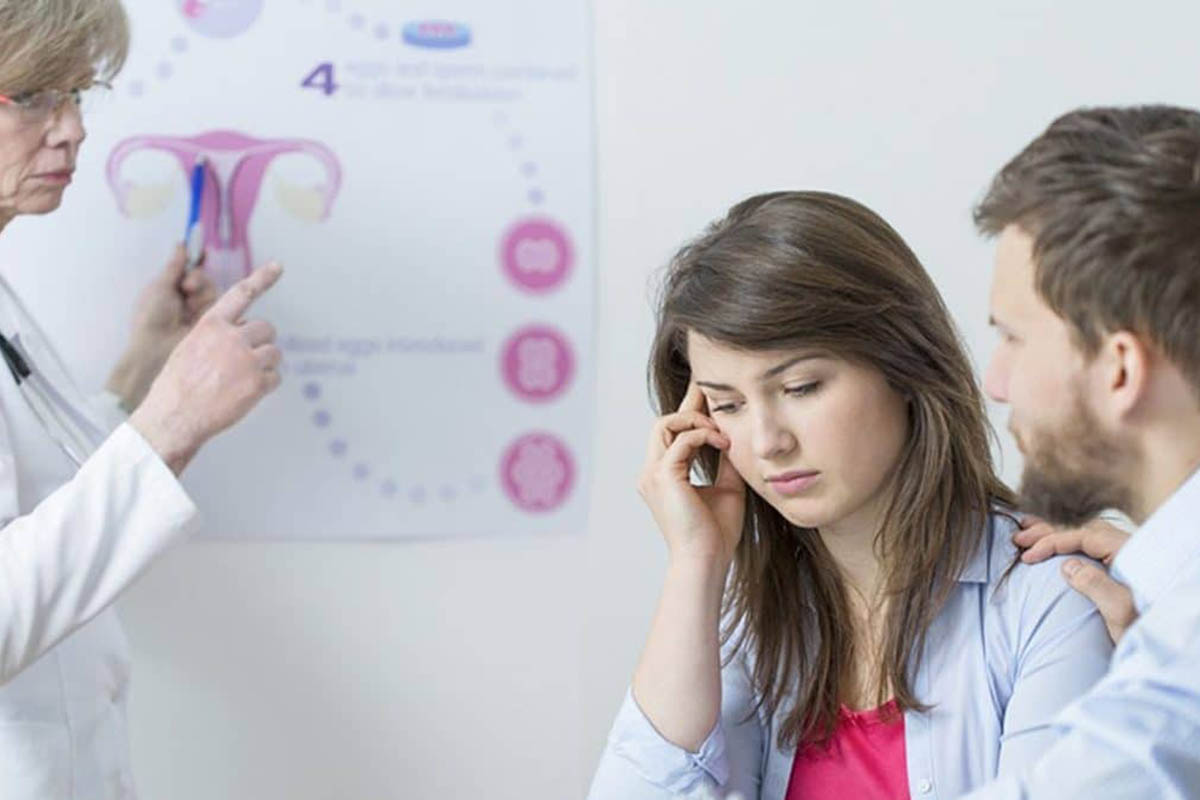
Dan and Cathy sat in my counselling office, having come to see me to discuss whether they would use sperm donation to conceive their baby. A few months earlier, their physician had told them he had been unable to locate any sperm at all in Dan’s ejaculate or testicles. As we discussed the emotional impact of conceiving through sperm donation conception, Dan opened up about what it was like for him to be unable to get his wife pregnant.

“When I first found out I had no sperm, I was stunned,” he said. “And now I feel like Cathy married a dud. Why should she have to suffer for what my body can’t do?” Dan went on to tell me how he felt his wife deserved to be with a man who could give her as many babies as she wanted. As he spoke, tears filled his eyes. Cathy wept too. When I asked, “Did you ever worry that Cathy might leave you because you can’t get her pregnant?” Dan nodded, and said, “It crossed my mind. Honestly, sometimes I think she should just leave.” Cathy seemed shocked by both his tears and what he was saying, and quickly reassured him that she had no plans to leave him for a more fertile partner.

This is a scene that plays out in my office quite often. A diagnosis of infertility has a profound impact on anyone, but men experience a unique set of emotional responses when they are told they will not father a child “the usual way.”

Men’s emotional response to their infertility often looks much like the stages of grief. Many develop symptoms consistent with post-traumatic stress. Sometimes men try to push their emotional response aside. However, not acknowledging the emotional impact of infertility doesn’t make it go away. Unacknowledged emotional distress can make itself known in ways that may not look like grief. Some men throw themselves into work. Others become dependent on drugs or alcohol, or exercise excessively. Some develop physical symptoms separate from the infertility. Many men are deeply ashamed of their infertility, and worry about anyone else finding out. They may tell nobody, and ask their partner not to disclose the infertility either. This can isolate the couple from possible sources of support.

“Sitting in the doctor’s office being told my sperm count was zero, it felt like my world had fallen apart around me. I don’t even remember what he said after ‘there is no sperm in your sample.’ I couldn’t speak to my wife – I  barely remember driving home. I went totally blank.”

Typically, the first reaction to a diagnosis of male factor infertility is intense shock. At the time they are informed of the poor results of their sperm analysis, most men report physical feelings of numbness, dizziness, shortness of breath, pounding heart, sweating, blurred or tunnel vision, temporary deafness or buzzing or roaring in the ears, and muscle tremors. Feelings include intense anxiety, guilt, fear, panic, and anger. The initial shock symptoms are usually short-lived (minutes to hours).
 
“I remember thinking, ‘This can’t be true, they must have missed something, made a mistake.’ Lots of times I just couldn’t bear thinking of it at all, and kind of switched myself off. I know my wife found me very hard to reach at those times. But I couldn’t help it…it was just too much.”

Quickly following the initial shock, the newly diagnosed infertile man will likely move to a denial or dissociation mode, in which he settles into a kind of numbness. In this stage, his mood will be flat; he will appear “zoned out” and less responsive. He will likely be less physically active, and may appear depressed. Less often, a man goes the opposite direction, and actually appears overly cheerful or optimistic, full of energy. This can be understood as an attempt to convince himself that there is no problem – that his world really hasn’t collapsed. He may search for other medical options or opinions.

“I can’t handle the thought that I will not continue … my eyes, my thoughts, my dreams. I will never have the joy or satisfaction of saying, ‘This is a part of me.’ I am very angry at God: He has taken the one thing I wanted, the part of me that means the most.”

After the denial phase, the infertile man may show profound upset and angry emotions. He may be insecure and overly sensitive to real or imagined slights and emotionally clingy or overly dependent on his partner. Other times, the man displays a more active upset or angry response. In this case, he will be short-tempered, irritable, and may be prone to emotional outbursts and crying. In his relationship, he may become possessive, jealous, controlling and dominant, even if he has not behaved in this way before. He may experience poor memory and concentration, inattention to detail, poor decision-making and problem solving, and an inability to see long-term consequences to present situations or actions. Withdrawal from friends, social circles, activities and events is common.

“I offered my wife a divorce because we had gotten married to have children. I felt bad, freakish, strange.”

In relation to his partner, the infertile man usually feels intense guilt, even if he knows that the infertility was not his choice and is not his fault. He may try to push her away or release her from the relationship “for her own good.” Sometimes this is a conscious process, in which he will offer her a divorce; sometimes he may raise the possibility in a joking manner. At other times, however, he will simply behave in impossible ways to try and push her out of the relationship so she can find someone else who can give her what she wants so badly. If he is feeling an intense level of guilt, he is not likely to open up to his wife about it because he may feel he has already burdened her enough by being infertile in the first place. When she is upset about the infertility, he may feel the least he can do is not make her distress worse by talking about his own, and he may keep his feelings to himself. An emotional disconnect may result, even in couples previously close. In most cases, the man is acutely aware that his partner is profoundly disappointed by his infertility, even if she does not overtly blame him. Protecting his wife or girlfriend is a central part of “being a man” for many males, but the infertile man may feel that not only is he the cause of her upset, he is also powerless to protect her from it or fix the problem. Therefore he may feel he’s failed at two central roles in his relationship: making her happy (by getting her pregnant) and protecting her (from his infertility).

“Every time I made love to my wife, I was reminded that I am nothing, can give her nothing. With my ‘fling’ I could still pretend I am a whole man.”

In terms of the effect of infertility on sexuality, the impact is usually immense. A man can feel like a “dud,” and sex can seem pointless if it cannot result in conception. Most men who receive a diagnosis of male factor infertility go through a period of sexual dysfunction that may last from three months to a year or longer. A man’s interest in sex may disappear completely, or he may experience desire but be unable to achieve or sustain an erection. More rarely, the effect on the sex drive is an almost compulsive sexual acting out, in which the infertile man becomes hypersexual. Men who respond in this manner sometimes initiate sexual contact with women other than their partners, even if infidelity was previously not their style. When sex becomes problematic, both partners can miss the intimacy and emotional closeness they previously shared through sexual connection.

“I went through wild swings of emotion. One day I would be very positive, thinking my infertility is a challenge I can overcome. Then I would slump into a deep dark hole again.”

Depending upon the course of action the couple decides upon, psychological symptoms can persist for months and even years. If the man produces some sperm or if sperm is retrieved surgically, the couple may proceed to IVF/ICSI. The man often feels intensely guilty that his partner is required to undergo invasive and painful medical procedures because of his infertility. If the treatment is successful, his symptoms are usually somewhat relieved, though he may continue to exhibit evidence of post-traumatic stress. If the treatment is not successful, the response is often a re-experiencing of the initial shock response, then reactivation of all or some of the subsequent symptoms.

If the couple chooses to use donated sperm to conceive, the man usually has mixed emotions. He is likely relieved that he and his partner have a chance to parent a child together, but he often feels a sense of humiliation and shame that another man could accomplish conception for his wife when he himself cannot. He may wonder if he can truly love a child not genetically related to him.

The emotional impact of male and female infertility is profound. Those experiencing it often feel alone and isolated, and wonder if anyone else in the world feels what they feel. It’s important to remember that you don’t have to cope with this alone. There is counselling available for both partners. IAAC can direct you to support groups and other resources and information. Infertility is not a burden you have to carry all by yourself.

About the author

Sherry Dale (formerly Sherry Franz) specializes in counselling for infertility and pregnancy loss. She works full-time at the LifeQuest Centre for Reproductive Medicine. Clients can see her at LifeQuest even if they are not patients there (e-mail sdale@lifequestivf.com or call 416 506-0804). Sherry also has a private counselling practice, where she can be reached at sherry.dale@pathcom.com or 416 410-8904. Sherry lives in Toronto with her two sons, both conceived through assisted reproductive technologies.

Privacy Policy Sitemap Donate Contact


© 2006-2010 IAAC
Infertility Awareness Association of Canada
2160 Nightingale Ave
Montreal, QC H9S 1E4
Tel: 514 484-2891
Toll free: 1 800 263-2929