Overcoming Age Related Infertility with Traditional Chinese Medicine

Printer-friendly versionPrinter-friendly version

by Aina Zhang

 Introduction

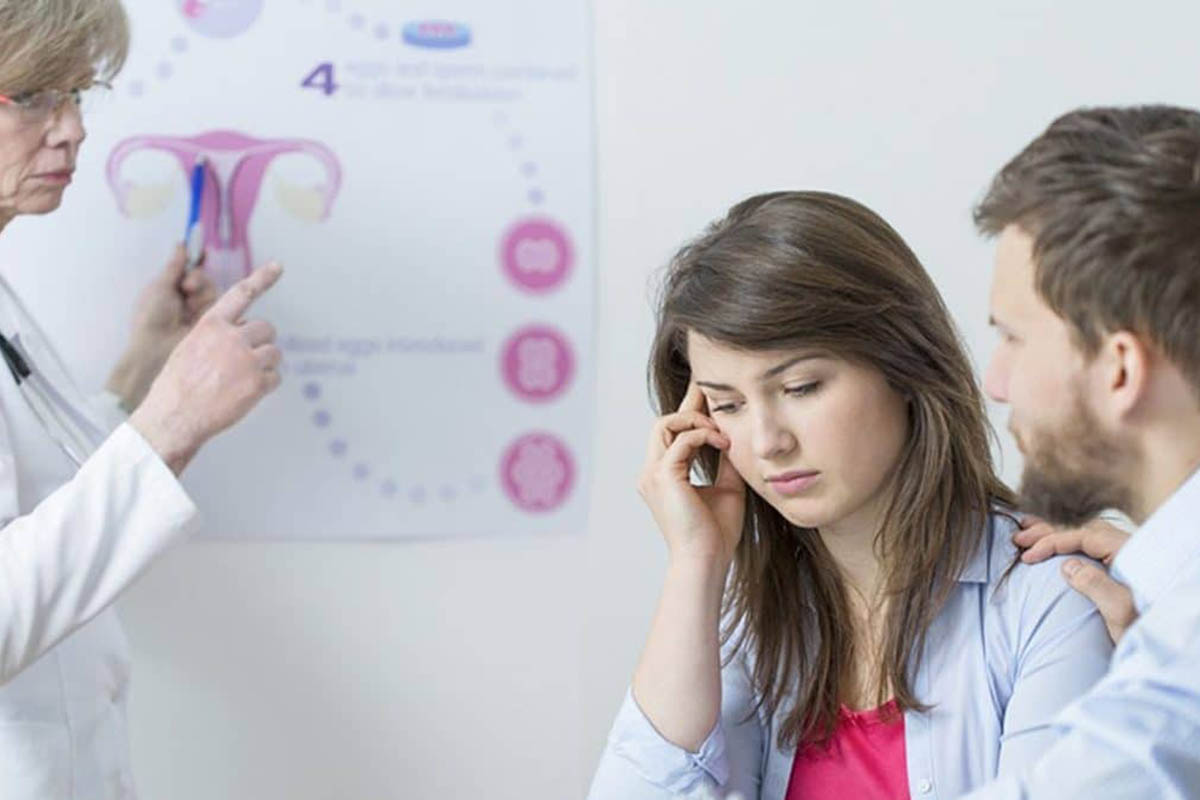
One of the most common causes of female infertility is age. It is a simple fact of life that female fertility decreases significantly after the early thirties. However, Traditional Chinese Medicine (TCM), with its holistic approach, can help infertility patients to turn back their biological clock, to a certain degree. In our clinic, we have helped many aging patients, to get pregnant.

In recent years, acupuncture and herbal medicine have become increasingly accepted as an effective alternative and complement to Western Medicine in the treatment of female infertility. In Canada, it used to be the last option for patients, but now, more and more patients are seeking TCM fertility treatment prior to or in conjunction with western medical treatments.

Some of the advantages of TCM fertility treatments are:

1. It is relatively effective in the treatment of infertility caused by functional abnormalities, which are more frequently seen in aging women.

2. It has virtually no negative side effects, regulates menstrual cycles, diminishes PMS and menstrual pain and improves overall health.

3. It is relatively inexpensive. A weekly three-menstrual-cycle acupuncture treatment costs less than $1000, and it may be covered by the private insurance.

4. Even if a patient fails to conceive at the end of the treatment, she is as fertile as she can be, and therefore, her chances for future IVF are increased by as much as 40 percent, according to a study conducted by W. Paulus and M. Zhang (Influence of Acupuncture on the Pregnancy Rate in Patients Who Undergo Assisted Reproduction Therapy; Fertility and Sterility, April, 2002).

5. It is non-intrusive and is actually a very comfortable treatment that relieves the stresses associated with infertility and its treatments.

Physiology of the female reproductive system

From the perspective of Chinese medicine, the kidney, spleen and liver are the three most relevant internal organs affecting the functions of female reproductive system. Bear in mind that names, such as kidney, spleen, liver and blood, are more meaningful than their anatomical and physiological definitions in western medicine.

Kidney – One of the major functions of the kidney is to store the kidney Jing (the essence of life), which includes prenatal Jing (inherited from parents, and not replaceable) and postnatal Jing (acquired from food and replaceable). The kidney Jing can be transformed into blood and kidney Qi, which becomes the source of human growth, development and reproduction.

According to Chinese medicine, the variation of kidney Jing supply produces significant physiological changes in a woman’s life every seven years. At 7, a girl starts to mature into a young woman; at 14, she has her first menstruation and is able to conceive; at 21 and 28, she reaches her most fertile years; at 35, her fertility starts to diminish; at 42, her fertility is mostly lost and at 49, a woman’s kidney Jing is depleted, and therefore, she has her menopause.

Spleen – The main functions of the spleen are to transform food nutrients to Qi, blood and postnatal Jing and to keep the blood circulating within the vessels.

Liver - Two of the major functions of the liver are to regulate Qi (vital energy) and blood and to store blood.

Pathology for age-related female infertility

Everyday, our spleen transforms food to Qi, blood and postnatal Jing. At the same time, all life activity consumes both Qi and blood. When blood is insufficiently formed or excessively lost, Jing is transformed to blood to ensure an adequate amount of blood is present to support the proper functioning of our body. If postnatal Jing is not sufficient to cover the needs, then prenatal Jing is withdrawn to meet the demand.

As a woman ages, the spleen becomes less efficient at transforming food to Qi, blood and postnatal Jing, and her menstruation is a monthly drain of blood. In addition, many events in a woman’s life, such as malnutrition, constitutional insufficiency in digestive

system, digestive disease and a stressful lifestyle, will further hinder the formation of blood. liver blood becomes deficient as a result. Without a sufficient supply of blood from the liver, the womb can not be sufficiently nourished and warmed, thus the womb is unable to support the embedding and growth of a fetus. 

Other factors, such as chronic disease, abortions and miscarriages, multiple childbirths and childbearing and an overly taxing lifestyle accelerate the consumption of Kidney Jing.

With age, a woman naturally has less and less kidney Jing and blood available to support reproductive function. On the other hand, the reproductive function (including menstruation) depends heavily on kidney Jing and blood. Without sufficient kidney Jing and blood, infertility results. There are many other pathologies of female infertility, but the aforementioned two are most common ones.

A woman’s menstrual cycle is often a true reflection of her blood formation and kidney Jing reserve. An abnormal menstrual cycle is the most important symptom of diminished reproductive function; consequently, the treatment of female infertility always starts from regulating the menstrual cycle.

Treatment of age related infertility by Chinese medicine

One of the most important principles in TCM is called Bian Zhen Shi Zhi which means identify and treat the root cause for each patient. The following table contains more information concerning the common pathology and treatment orientation for female infertility:

Integrated treatment for female infertility patients

In a very general sense, Chinese medicine can be more effective in the treatment of infertility caused by functional anomalies and western fertility treatment is more effective in the treatment of infertility caused by structural anomalies.

With over 2000 years of continually documented clinical history, Chinese medicine has developed comprehensive theories, diagnosis procedures and treatment protocols, independent from those of the western medicine. For a Chinese medical doctor who studied both Chinese and Western medicine, western medical diagnosis is often a useful reference tool, and can be used to increase the treatment efficacy. Advanced assisted reproductive technologies are very good tools for the treatment of structurally related infertility. Overall, an integrated approach provides the best of both worlds for our patients.                                   

About The Author: Aina Zhang is a licensed Acupuncturist with a L. Ac., M.D. and Masters in Gynecology (China). She has over 20 years of clinical experience in both Chinese and Western Medicine. She can be reached at ainazhang@sinocare.ca, and you can find more information about her practice at www.sinocare.ca.


TCM
Pathology
Typical Indications /
symptoms
Potential causes
TCM treatment
orientation
Kidney
Yang
Deficiency

Inability to conceive, prolonged menstrual cycles, small volume of pale menstrual discharge (in some cases amenorrhea). Accompanied by dull complexion, lassitude, cold extremities, lower backache, and weakness of the legs, poor libido, copious clear urine, and unformed stools.

Over exposure to cold weather, overeating of cold food, constitutional deficiency, stressful life and sedentary lifestyle.

Changing eating habits and lifestyle, warm the kidneys, invigorate Yang, nourish the blood, regulate and rectify the Chong and Ren meridian.

Kidney &
Spleen
Deficiency

In addition to all symptoms for kidney Yang Deficiency, low appetite, bloating, frequent loose stool, cold sensation in mid and lower abdomen.

Same as the above

Same as the above; plus warm the spleen

Kidney
Yin
Deficiency

Inability to conceive, shortened menstrual cycles, a scanty menstrual discharge that is red in color and contains no blood clots, emaciation, weak aching lower back and legs, dizziness and vertigo, blurred vision, palpitations, insomnia, dry mouth and afternoon fever.

Constitutional deficiency, chronic disease, abortions and miscarriages, multiple childbirths, overly taxing lifestyle, drug abuse, aging and chronic malnutrition.

Changing lifestyle, Moisten kidney Yin, nourish the blood, regulate and rectify the Chong and Ren meridian.

Liver Qi
Stagnation

Inability to conceive, irregular menstrual cramps, difficult menstrual flow, scanty dark menstrual discharge containing blood clots, premenstrual breast or abdominal distention, depression and irritability.

Mental stress, sedentary lifestyle, substance abuse (cigarette, alcohol, medication, drugs…), large consumption of medication, stressful life and sedentary style.

Changing eating habits and lifestyle, soothe the liver, move Qi, nourish the blood, regulate menstruation.

Phlegm-
Damp
Obstruction

Inability to conceive, overweight, prolonged menstrual cycles, amenorrhea in severe cases, copious thick vaginal discharge, pale complexion, dizziness and vertigo, palpitations, thoracic congestion and nausea.

Overweight, overexposure to cold weather, over consumption of cold (temperature and energetically).

Changing eating habits and lifestyle, dry dampness, dissolve phlegm, move Qi, regulate menstruation.

Blood
Stasis

Inability to conceive, prolonged menstrual cycles, scanty blackish purple menstrual discharge with blood clots, menstrual cramps, lower abdominal pain, aggravated by palpitation.

Overexposure to cold weather, over consumption of cold, sedentary lifestyle, and chronic malnutrition.

Changing eating habits and lifestyle, quickens the blood, expel blood stasis, regulate menstruation

Privacy Policy Sitemap Donate Contact


© 2006-2010 IAAC
Infertility Awareness Association of Canada
2160 Nightingale Ave
Montreal, QC H9S 1E4
Tel: 514 484-2891
Toll free: 1 800 263-2929