
DOWN FOR THE COUNT: WHY SPERM COUNTS ARE DECLINING By Michael Neal - SUMMER 2011
DOWN FOR THE COUNT: WHY SPERM COUNTS ARE DECLINING
By Michael Neal
Twenty years ago a Danish scientist named Niels Skakkebaek presented ground-breaking data at a World Health Organization conference indicating that sperm counts in men had fallen by about half over the last 50 years. At the time, experts in human reproductive biology were astonished by these findings. In the past two decades much controversy and more studies since this initial report have changed the debate from “if” to “why” sperm counts are declining in men.
According to the National Institutes of Health (NIH) sperm concentrations have declined by 1.5% per year in North America and 3.1% in Europe between 1940 and 1990. It was suggested that men, at this rate, were on the path to becoming completely infertile within a few generations. More recent studies have shown this rate of decline has slowed and may have bottomed out. Closer examination has revealed that sperm counts have decreased significantly in some geographic areas and have held steady in others. Several studies have documented these geographic differences and some have focused on their root cause. Exposure to environmental toxicants is one plausible explanation for the geographic variation in sperm counts. In a report from 2003, levels of pesticides were found to be significantly higher in men from a farming region compared to their city-dwelling counterparts. This, in part, helps to explain the geographic variation in sperm counts that has been observed.
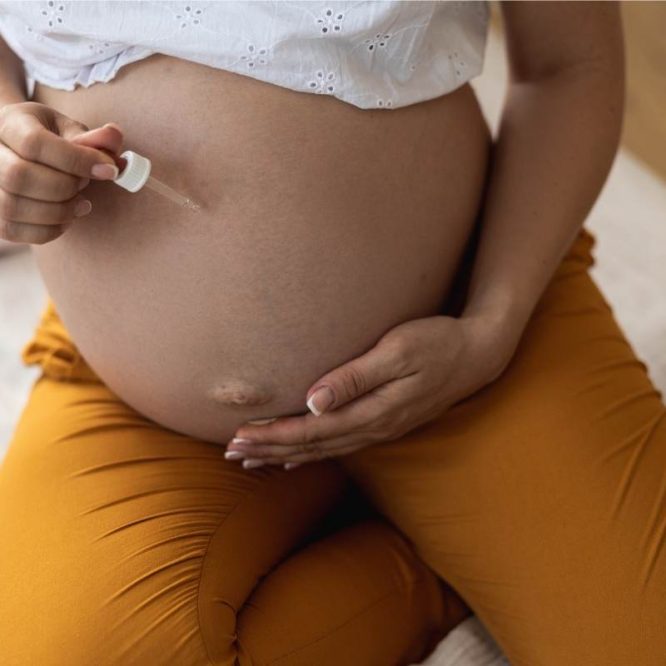
Regardless, among the one in six infertile couples in Canada, a diagnosis of “male factor” is becoming more common. As a result there is now a greater focus on the male. Experts have termed the related disorders leading to this phenomenon testicular dysgenesis syndrome. The observed changes in sperm production have occurred too quickly to be attributed to genetics. It is speculated that the living environment of the man could be blamed for plummeting sperm counts. Everything from lifestyle factors (i.e.: cigarette smoking, alcohol consumption); exposure to persistent organic pollutants (i.e.: pesticides such as DDT, industrial PCBs) to the modern fashion trend for tight underpants has been investigated. However, it is difficult to pinpoint a specific factor responsible for the fall in sperm counts. It is likely that many combined environmental and lifestyle changes over the past 50 or so years are inherently detrimental to sperm production. Moreover, there is now an emerging consensus that whatever is exacerbating the problems of male infertility, it probably starts in the womb. It may be that the problem is not the lifestyle of men that, but that of their mothers. Animal studies have shown that when the male fetus is exposed in utero to chemicals known as endocrine disruptors (i.e.: those that mimic male and female hormones) its fertility can be altered in adulthood. Humans are commonly exposed to phthalates and dioxins, which are known to reduce sperm counts in experimental animals. Recent data from the Centers for Disease Control indicated that one of the subpopulations with the highest level of exposure to these types of chemicals may be women of child-bearing age.
We have known that exposure to chemicals can harm human reproduction since Roman times, when lead was first recognized to cause miscarriage and infertility. In the mid-50s we learned that the placenta does not protect the fetus from the damaging effects of chemicals, when women who consumed mercury-contaminated fish while pregnant gave birth to children with debilitating neurological and reproductive problems. A further example came when women who took the anti-morning sickness drug, thalidomide, gave birth to babies with severe limb deformities. Through these historical experiences we realized that the fetus can be uniquely sensitive to chemical exposures. In the early 1970’s we discovered that chemicals can undermine the development and health of our offspring in less visible but equally damaging ways. Daughters born to women who took the miscarriage prevention drug, DES, developed a rare form of cervical cancer. In addition both daughters and sons were found to have high rates of reproductive problems and infertility. Over time it was discovered that these reproductive problems could be passed on to a third generation, despite the fact that the grandchildren of the women who had taken DES never took the drug themselves. These painful lessons have resulted from the much higher levels of chemical exposure that the average Canadian experiences. With our increasing exposure to man-made chemicals it was assumed that we would not face any harm. However, over the past decade, we are beginning to realize that this was a naïve assumption. Exposures to environmental toxicants have been linked to the increased risk of disease, malfunction and infertility.
Sperm production, called spermatogenesis, starts in adolescence. However, the cells responsible for spermatogenesis are laid down during fetal development. These Sertoli cells act as “nurse” cells to orchestrate and control the process of spermatogenesis. Each Sertoli cell can only influence a finite number of germ cells through development into a mature sperm. Hence, the number of Sertoli cells present in the testis puts a limit on the number of sperm cells that can be produced. An increasing number of studies point to a critical time in testicular development that begins in the growing human fetus and ends in the first six months of a boy’s life. Disruption of these cells during this critical time of testicular development creates a limited capacity, and a baby boy will be unable to produce normal sperm concentration levels once an adult.
Many studies support the connection between early development in the womb and male reproductive problems later in life, especially low sperm counts. For example, one of the strongest pieces of scientific evidence comes from studies of people who smoke. A man who smokes typically reduces his sperm count by 15 per cent, which is often reversible if he quits. In contrast, a man born to a mother who smoked during pregnancy has a dramatic decrease in sperm count of 40 per cent. This is not reversible, lending further credibility to the theory of depleted Sertoli cells in utero.
Exposure to cigarette smoke is a classic example. However, we are inundated with a never-ending list of chemicals in our environment. This makes the task of identifying key lifestyle or environmental factors next to impossible. Furthermore, it is not likely that there is a single cause leading to low sperm counts. The process of sperm formation can be derailed at multiple points in the process including: i) developmental formation (in utero) of the glands and organs essential for sperm production; ii) alteration of hormone sensitivity, and; iii) during the adult process of spermatogenesis. Different environmental chemicals are likely to be damaging to different links in the chain that leads to the production of healthy sperm. Taken together these confounding variables make it difficult to point to one cause. Better awareness about the consequences of our environment and modern lifestyle on future fertility is important to our existence.
About the Author
Michael Neal is the Scientific Director of ONE Fertility in Burlington, Ontario and is also a member of the Reproductive Biology Division, Department of Obstetrics and Gynecology, McMaster University, Hamilton, Ontario.